For plastic-coated wire rope, you must strip away the coating from the section entering the gripper. The internal teeth must grip the bare metal strands directly; otherwise, the wire rope will slip.
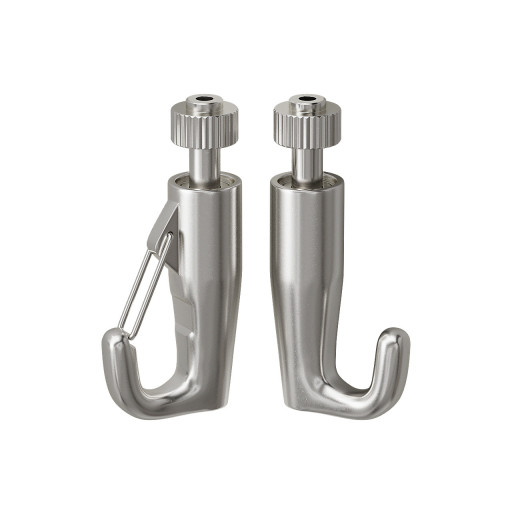
A cable gripper uses a jaw mechanism for tensioning and termination, while a wire rope clip (U-bolt) is typically used for forming a loop. The gripper offers tool-free, hand-adjustable operation, making it far more convenient to use than a wire rope clip.
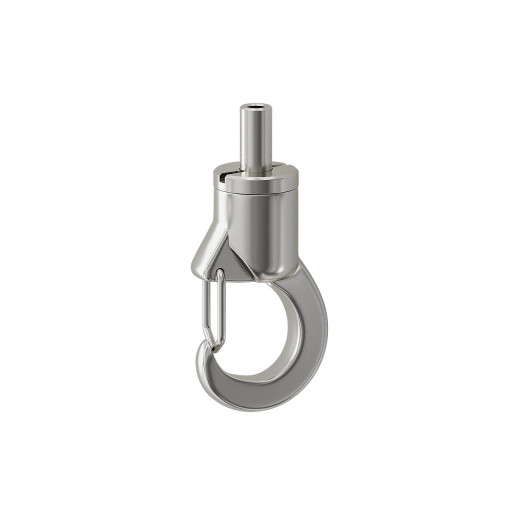
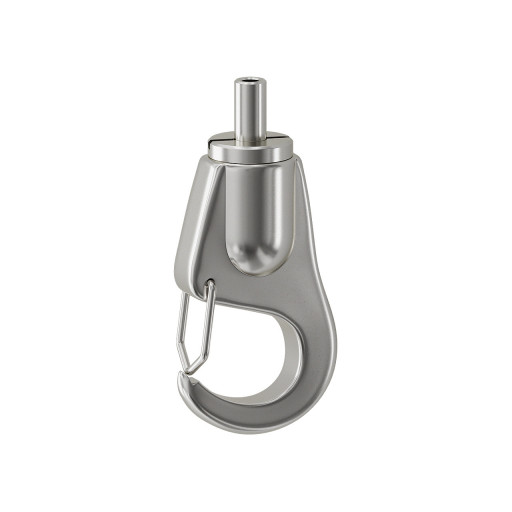
Not recommended. The open hook is designed for quick and easy hanging. It has no physical locking mechanism to prevent items from falling out. For moving or shaking environments, we recommend closed hooks with safety latches.
Our standard finish is Nickel plating, which offers good corrosion resistance. Other options include Chrome, Zinc, and Matte Black (spray-painted), are available upon request. Contact our sales team for details.
Among common wire rope materials, 316 stainless steel offers the best corrosion resistance, followed by 304, then zinc-aluminum alloy coated, hot-dip galvanized, electro-galvanized, and finally bright carbon steel.
304 is suitable for dry or indoor environments and general-purpose uses; 316 contains molybdenum (Mo) and offers superior protection against harsh chemicals such as salt water, acid rain, and alkaline well water, making it the choice for marine, coastal, medical, and food applications.
Use test solution for a quick grade check, OES spectrometer for full alloy composition, and salt spray testing (ASTM B117) for corrosion resistance.
For the same diameter and construction, a general purpose wire rope (typically 1670 MPa) has higher breaking strength than a 304 or 316 stainless steel wire rope, which typically 1570 MPa.